Publications
Second-order Fermi acceleration as the origin of the Fermi bubbles
NUCLEAR INSTRUMENTS & METHODS IN PHYSICS RESEARCH SECTION A-ACCELERATORS SPECTROMETERS DETECTORS AND ASSOCIATED EQUIPMENT 692 (2012) 265-268
Searches for periodic neutrino emission from binary systems with 22 and 40 strings of IceCube
Astrophysical Journal 748 (2012)
Gravitino cosmology with a very light neutralino
ArXiv (2011)
It has been shown that very light or even massless neutralinos are consistent with all current experiments, given non-universal gaugino masses. Furthermore, a very light neutralino is consistent with astrophysical bounds from supernov{\ae} and cosmological bounds on dark matter. Here we study the cosmological constraints on this scenario from Big Bang nucleosynthesis taking gravitinos into account and find that a very light neutralino is even favoured by current observations.
Quantifying uncertainties in the high energy neutrino cross-section
ArXiv (2011)
We compare predictions for high energy neutrino and anti-neutrino deep inelastic scattering cross-sections within the conventional DGLAP formalism of next-to-leading order QCD, using the latest parton distribution functions such as CT10, HERAPDF1.5 and MSTW08 and taking account of PDF uncertainties. From this we derive a benchmark cross-section and uncertainty which is consistent with the results obtained earlier using the ZEUS-S PDFs. We advocate the use of this for analysing data from neutrino telescopes, in order to facilitate comparison between their results.
Dense Electron-Positron Plasmas and Ultraintense gamma rays from Laser-Irradiated Solids
Physical Review Letters 108 (2012) 165006
Weak Alfvén-wave turbulence revisited.
Phys Rev E Stat Nonlin Soft Matter Phys 85 (2012) 036406-
Weak Alfvénic turbulence in a periodic domain is considered as a mixed state of Alfvén waves interacting with the two-dimensional (2D) condensate. Unlike in standard treatments, no spectral continuity between the two is assumed, and, indeed, none is found. If the 2D modes are not directly forced, k(-2) and k(-1) spectra are found for the Alfvén waves and the 2D modes, respectively, with the latter less energetic than the former. The wave number at which their energies become comparable marks the transition to strong turbulence. For imbalanced energy injection, the spectra are similar, and the Elsasser ratio scales as the ratio of the energy fluxes in the counterpropagating Alfvén waves. If the 2D modes are forced, a 2D inverse cascade dominates the dynamics at the largest scales, but at small enough scales, the same weak and then strong regimes as described above are achieved.
Search for ultrahigh-energy tau neutrinos with IceCube
Physical Review D - Particles, Fields, Gravitation and Cosmology 86 (2012)
Limits on neutrino emission from gamma-ray bursts with the 40 string IceCube detector.
Phys Rev Lett 106 (2011) 141101-
IceCube has become the first neutrino telescope with a sensitivity below the TeV neutrino flux predicted from gamma-ray bursts if gamma-ray bursts are responsible for the observed cosmic-ray flux above 10(18) eV. Two separate analyses using the half-complete IceCube detector, one a dedicated search for neutrinos from pγ interactions in the prompt phase of the gamma-ray burst fireball and the other a generic search for any neutrino emission from these sources over a wide range of energies and emission times, produced no evidence for neutrino emission, excluding prevailing models at 90% confidence.
Proton probe measurement of fast advection of magnetic fields by hot electrons
PLASMA PHYSICS AND CONTROLLED FUSION 53 (2011) ARTN 124026
Monte Carlo calculations of pair production in high-intensity laser-plasma interactions
Plasma Physics and Controlled Fusion 53 (2011)
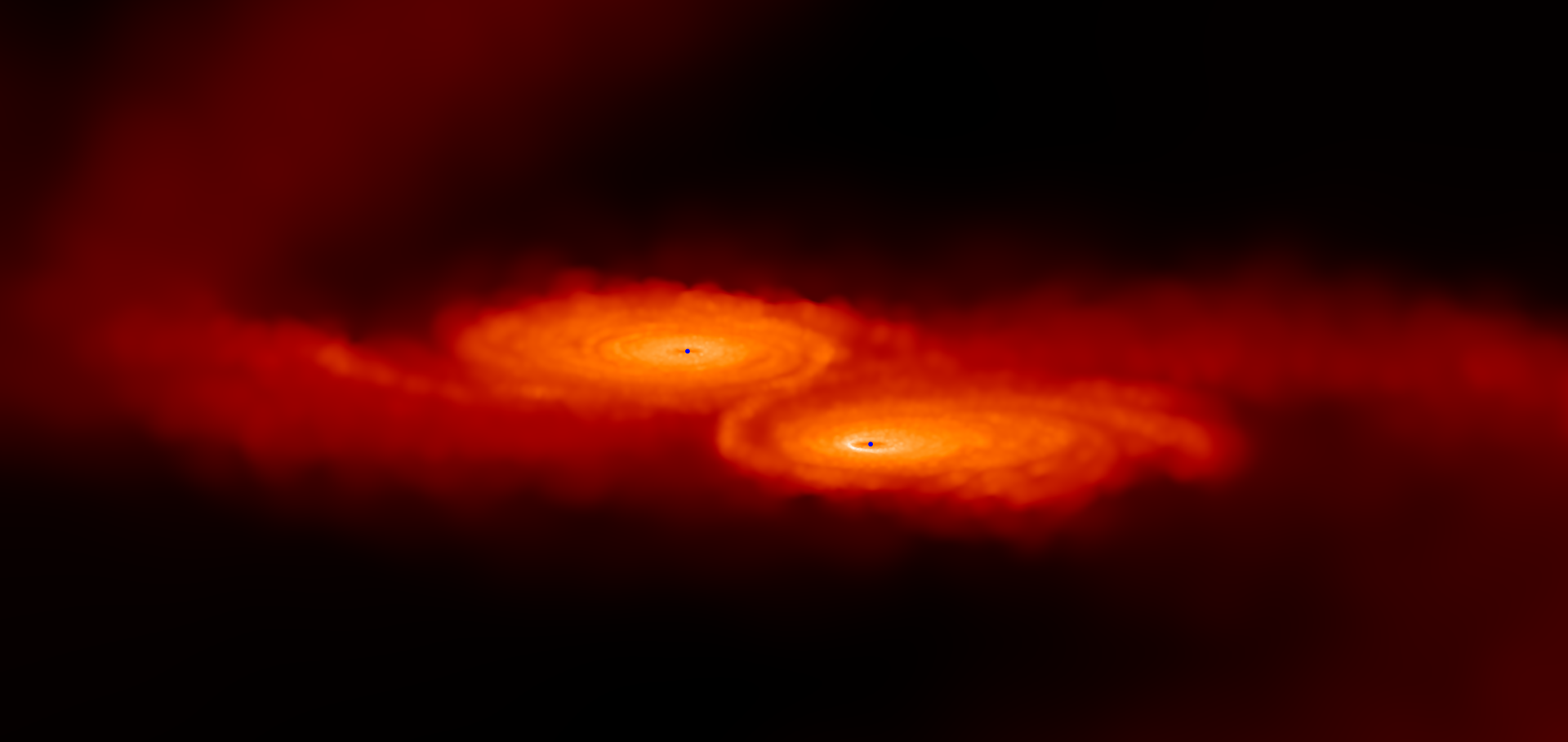
SS433's accretion disc, wind and jets: before, during and after a major flare
MONTHLY NOTICES OF THE ROYAL ASTRONOMICAL SOCIETY 417 (2011) 2401-2410
How Does Feedback Affect Milky Way Satellite Formation?
ArXiv (2011)
We use sub-parsec resolution hydrodynamic resimulations of a Milky Way (MW) like galaxy at high redshift to investigate the formation of the MW satellite galaxies. More specifically, we assess the impact of supernova feedback on the dwarf progenitors of these satellite, and the efficiency of a simple instantaneous reionisation scenario in suppressing star formation at the low-mass end of this dwarf distribution. Identifying galaxies in our high redshift simulation and tracking them to z=0 using a dark matter halo merger tree, we compare our results to present-day observations and determine the epoch at which we deem satellite galaxy formation must be completed. We find that only the low-mass end of the population of luminous subhalos of the Milky-Way like galaxy is not complete before redshift 8, and that although supernovae feedback reduces the stellar mass of the low-mass subhalos (log(M/Msolar) < 9), the number of surviving satellites around the Milky-Way like galaxy at z = 0 is the same in the run with or without supernova feedback. If a luminous halo is able to avoid accretion by the Milky-Way progenitor before redshift 3, then it is likely to survive as a MW satellite to redshift 0.
The inverse-Compton ghost HDF130 and the giant radio galaxy 6C0905+3955: Matching an analytic model for double-lobed radio source evolution
Monthly Notices of the Royal Astronomical Society (2011)
The effect of the geomagnetic field on cosmic ray energy estimates and large scale anisotropy searches on data from the Pierre Auger Observatory
Journal of Cosmology and Astroparticle Physics 2011 (2011)
Galactic fountains and the rotation of disc-galaxy coronae
Monthly Notices of the Royal Astronomical Society 415 (2011) 1534-1542
Cosmogenic photons as a test of ultra-high energy cosmic ray composition
ArXiv (2010)
Although recent measurements of the shower profiles of ultra-high energy cosmic rays suggest that they are largely initiated by heavy nuclei, such conclusions rely on hadronic interaction models which have large uncertainties. We investigate an alternative test of cosmic ray composition which is based on the observation of ultra-high energy photons produced through cosmic ray interactions with diffuse low energy photon backgrounds during intergalactic propagation. We show that if the ultra-high energy cosmic rays are dominated by heavy nuclei, the flux of these photons is suppressed by approximately an order of magnitude relative to the proton-dominated case. Future observations by the Pierre Auger Observatory may be able to use this observable to constrain the composition of the primaries, thus providing an important cross-check of hadronic interaction models.
Turbulent transport in tokamak plasmas with rotational shear
Physical Review Letters 106 (2011)
In-situ determination of dispersion and resolving power in simultaneous multiple-angle XUV spectroscopy
JOURNAL OF INSTRUMENTATION 6 (2011) ARTN P10001
Galactic fountains and the rotation of disc-galaxy coronae
ArXiv (2011)
In galaxies like the Milky Way, cold (~ 10^4 K) gas ejected from the disc by stellar activity (the so-called galactic-fountain gas) is expected to interact with the virial-temperature (~ 10^6 K) gas of the corona. The associated transfer of momentum between cold and hot gas has important consequences for the dynamics of both gas phases. We quantify the effects of such an interaction using hydrodynamical simulations of cold clouds travelling through a hot medium at different relative velocities. Our main finding is that there is a velocity threshold between clouds and corona, of about 75 km/s, below which the hot gas ceases to absorb momentum from the cold clouds. It follows that in a disc galaxy like the Milky Way a static corona would be rapidly accelerated: the corona is expected to rotate and to lag, in the inner regions, by ~ 80-120 km/s with respect to the cold disc. We also show how the existence of this velocity threshold can explain the observed kinematics of the cold extra-planar gas.
